Purpose: Each year, we commemorate World Tuberculosis Day on March 24 to raise public awareness about the devastating health, social and economic consequences of TB, and to step up efforts to end the global TB epidemic. The World Health Organization (WHO) has been working with countries to strengthen drug resistance surveillance since the early 1990s. Data collated represents 99% of the world's population and people with TB. Through research and innovation, WHO works to accelerate development of rapid diagnostics and treatments for drug-resistant TB. Diagnosing multi-drug-resistant and other resistant forms of TB as well as HIV-associated TB can be complex and expensive. The day will inspire hope and encourage high-level leadership, increased investments, faster uptake of new WHO recommendations, adoption of innovations, accelerated action, and multi-sector collaboration to combat the TB epidemic.
FORUM: "Yes! We Can End TB: Led by countries. Powered by people" World Tuberculosis Day 2026. The theme is a bold call to action and a message of hope, affirming that it is possible to get back on track and turn the tide on the TB epidemic, even in a challenging global environment. With decisive country leadership, increased domestic and international investment, rapid uptake of new WHO recommendations and innovations, accelerated action, and strong multi-sectoral collaboration, ending TB is not just aspirational - it is achievable. WHO is calling for urgent action to: accelerate the roll out of diagnostic technologies that can be used near the point-of-care and other innovations as part of a comprehensive testing network; To strengthen people‑centred TB care with meaningful community leadership and continuous engagement; To build resilient health systems to safeguard health security; To tackle the social and economic drivers of TB through multisectoral action; and To protect essential TB services amid global crises and funding constraints. While new diagnostic tools represent a critical step forward, ending TB will require sustained investment in research and innovation. Global funding for TB research remains far below the estimated annual need of around US$ 5 billion, leaving major gaps in the development of new diagnostics, medicines and vaccines needed to end the epidemic. WHO is working with partners to accelerate progress through initiatives such as the TB Vaccine Accelerator Council, launched to fast-track the development and equitable access to new TB vaccines by aligning governments, researchers, funders and industry around shared priorities and coordinated investment. As countries mark World TB Day 2026, The WHO urges governments and partners to prioritize TB as a central pillar of health security and universal health coverage. Follow the conversation with the hashtags: #WorldTBDay, #24March, #YesWecanEndTB, #Tuberculosis.
EVENTS: On Monday; March 24th; The World Health Organization (WHO) will commemorate the World Tuberculosis Day 2026 to urge countries to ramp up progress; Under the theme ''Yes! We Can End TB! Led by countries. Powered by people'' the campaign highlights a rallying cry for urgency, and accountability and hope. This year is critical, with opportunities to raise visibility and political commitment to end TB. On the occasion on World Tuberculosis (TB) Day, March 24th, the World Health Organization (WHO) is calling for an urgent investment of resources to protect and maintain tuberculosis (TB) care and support services for people in need across regions and countries. TB remains the world’s deadliest infectious disease, responsible for over 1 million deaths annually bringing devastating impacts on families and communities. The Global efforts to combat TB have saved an estimated 79 million lives since 2000. However, the drastic and abrupt cuts in global health funding happening now are threatening to reverse these gains. Rising drug resistance especially across Europe and the ongoing conflicts across the Middle-East, Africa and Eastern Europe, are further exacerbating the situation for the most vulnerable. Register to participate!
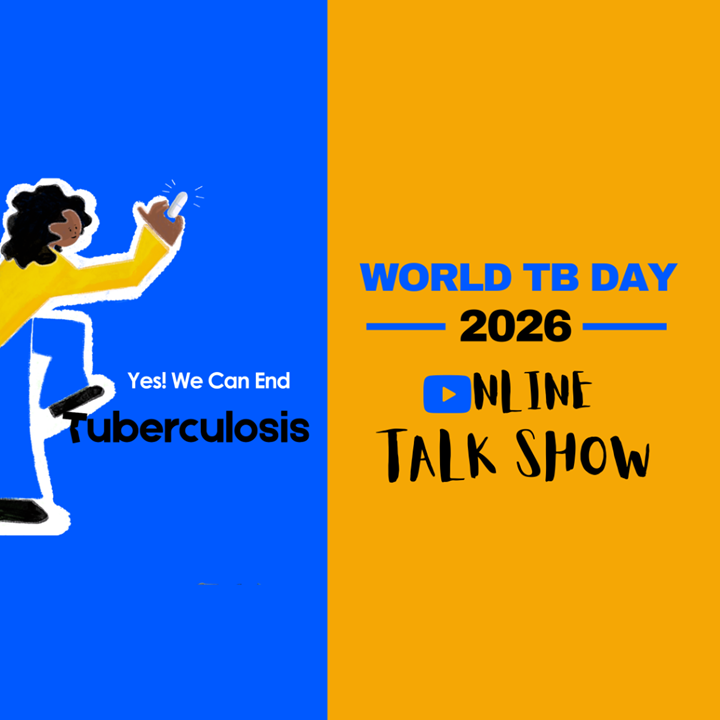
ONLINE TALK SHOW: On March 18th, 2026; From 13:30 to 16:00 CET; an Online Talk Show entitled ‘‘Yes we can end TB.’’ was held. Watch the talk show!
WEBINAR: A joint webinar of the WHO Regional Office for Europe and the European Centre for Disease Prevention and Control (ECDC), dedicated to World Tuberculosis Day 2026. Campaign theme: “Yes! We Can End TB!: Led by countries, powered by people!” The event presented key findings, trends, and epidemiological signals based on data from the joint report “Tuberculosis surveillance and monitoring in Europe 2026”. It also highlighted the high burden of MDR/RR‑TB, gaps in treatment, and the scale-up of innovative diagnostic and therapeutic approaches. Get the agenda programme and Watch the livestream!
RESEARCH: A New Tuberculosis Strategy Shows Promise from Science | AAAS. Now a group in the Republic of Korea reports what they believe could be a potent new method of fighting TB: a combination of cheap drugs and a DNA vaccine. Learn more.
PUBLICATIONS: Funding: threat to global TB efforts - Early reports to WHO reveal that severe disruptions in the TB response are seen across several of the highest-burden countries following the funding cuts. Countries in the WHO African Region are experiencing the greatest impact, followed by countries in the WHO South-East Asian and Western Pacific Regions. Twenty seven countries are facing crippling breakdowns in their TB response, with devastating consequences, such as: Human resource shortages undermining service delivery; Diagnostic services severely disrupted, delaying detection and treatment; Data and surveillance systems collapsing, compromising disease tracking and management; Community engagement efforts, including active case finding, screening, and contact tracing, deteriorating, leading to delayed diagnoses and increased transmission risks. Nine countries report failing TB drug procurement and supply chains, jeopardizing treatment continuity and patient outcomes. The 2025 funding cuts further exacerbate an already existing underfunding for global TB response. In 2023, only 26% of the US$ 22 billion annually needed for TB prevention and care was available, leaving a massive shortfall. TB research is in crisis, receiving just one-fifth of the US$ 5 billion annual target in 2022 – severely delaying advancements in diagnostics, treatments, and vaccines. WHO is leading efforts to accelerate TB vaccine development through the TB Vaccine Accelerator Council, but progress remains at risk without urgent financial commitments.
New guidance on TB and lung health: As one of the solutions to combating growing resource constraints, WHO is driving the integration of TB and lung health within primary healthcare as a sustainable solution. New technical guidance released by WHO outlines critical actions across the care continuum, focusing on prevention, early detection of TB and comorbidities, optimized management at first contact and improved patient follow-up. The guidance also promotes better use of existing health systems, addressing shared risk factors such as overcrowding, tobacco, undernutrition and environmental pollutants. By tackling TB determinants alongside communicable and non-communicable diseases, lung conditions, and disabilities through a unified strategy, WHO aims to reinforce the global response and drive lasting improvements in health outcomes. On World TB Day, WHO calls on everyone: individuals, communities, societies, donors and governments, to do their part to end TB. Without concerted action from all stakeholders, the TB response will be decimated, reversing decades of progress, putting millions of lives at risk and threatening health security. TB remains the world’s deadliest infectious disease, responsible for over 1 million deaths annually bringing devastating impacts on families and communities.
STATEMENTS:


PODCASTS: People with drug-resistant TB face significant economic and social costs and only 1 in 3 access quality care. Reaching the missing patients remains a significant public health challenge. To address this, WHO reviews the latest evidence to set norms and standards for the diagnosis and care of drug-resistant TB. WHO works with countries, partners and civil society to expand rapid molecular diagnosis to detect drug-resistance, and to increase access to better and more effective treatments. Listen to the audio-podcasts!
CAMPAIGN MATERIALS: Since 2000, an estimated 66 million lives were saved through TB diagnosis and treatment. The WHO calls for urgent action to address worldwide disruptions in tuberculosis services putting millions of lives at risk. Let’s contribute to the next generation of TB treatments. Explore the World TB Day 2026: Advocacy and Communication Toolkit and download the poster, banner and postcards. Get the communication materials!
WHY WE CELEBRATE THE DAY?
HOW TO GET INVOLVED!
PARTNERSHIPS
The World TB Day is observed annually on March 24 th to raise awareness about TB and efforts to end the global epidemic, marking the day in 1882 when the bacterium causing TB was discovered. In response to the urgent challenges threatening TB services worldwide, the WHO’s Director-General and Civil Society Task Force on Tuberculosis have issued a decisive statement to demand immediate, coordinated efforts from governments, global health leaders, donors, and policymakers to prevent further disruptions.
Develop concerted action to End TB.
Tackle health inequities to ensure health for all.
Mobilize political and social commitment to ramp up progress against these ancient diseases.
Urgent investment of resources, support, care and information are vital to ensure universal access to TB care for research.
Outline the five critical priorities:
Addressing TB service disruptions urgently, ensuring responses match the crisis's scale;
Securing sustainable domestic funding, guaranteeing uninterrupted and equitable access to TB prevention and care;
Safeguarding essential TB services, including access to life-saving drugs, diagnostics, treatment and social protections, alongside cross-sector collaboration;
Establishing or revitalizing national collaboration platforms, fostering alliances among civil society, NGOs, donors, and professional societies to tackle challenges;
Enhancing monitoring and early warning systems to assess real-time impact and detect disruptions early.
The World Tuberculosis Day is co-organized by the World Health Organization, the WHO Europe, the WHO African Regional Office, the WHO SEARO, WHO EMRO, WHO WPRO, WHO/PAHO. With the participation of the TB Alliance, The Global Fund, the International Organization for Migration (IOM).
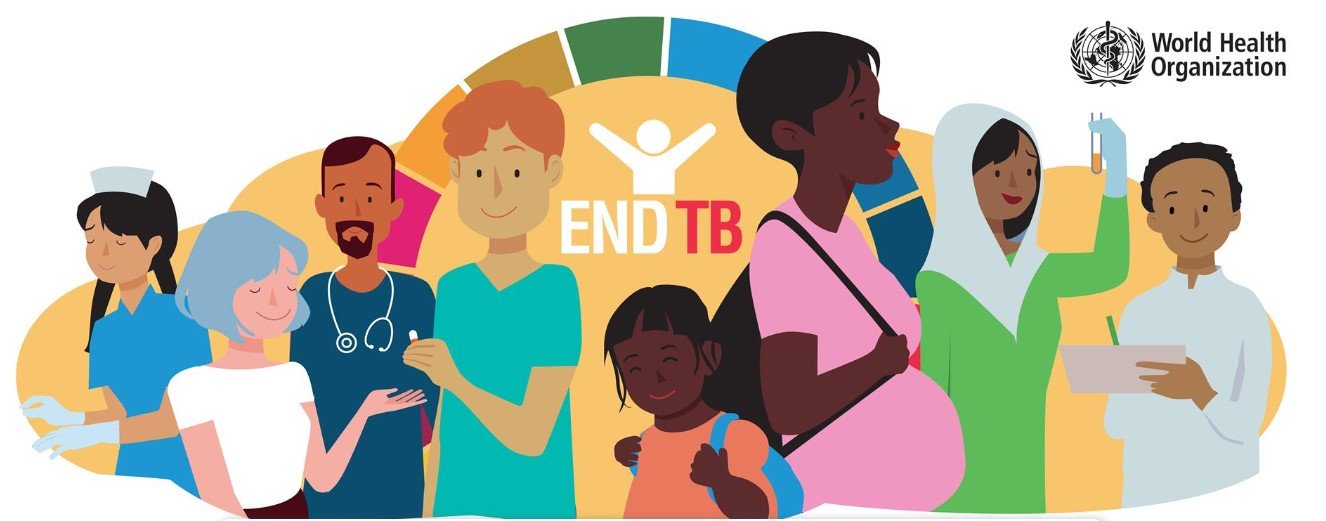
A comprehensive and up-to-date assessment of the TB epidemic, and of progress in prevention, diagnosis and treatment of the disease at global, regional and country levels.
Make a donation.
More investment will save millions more lives, accelerating the end of the TB epidemic. Preventing Tuberculosis. TB is a treatable and curable disease. Active, drug-susceptible TB disease is treated with a standard 6-month course of 4 antimicrobial drugs that are provided with information and support to the patient by a health worker or trained volunteer. Without such support, treatment adherence is more difficult.